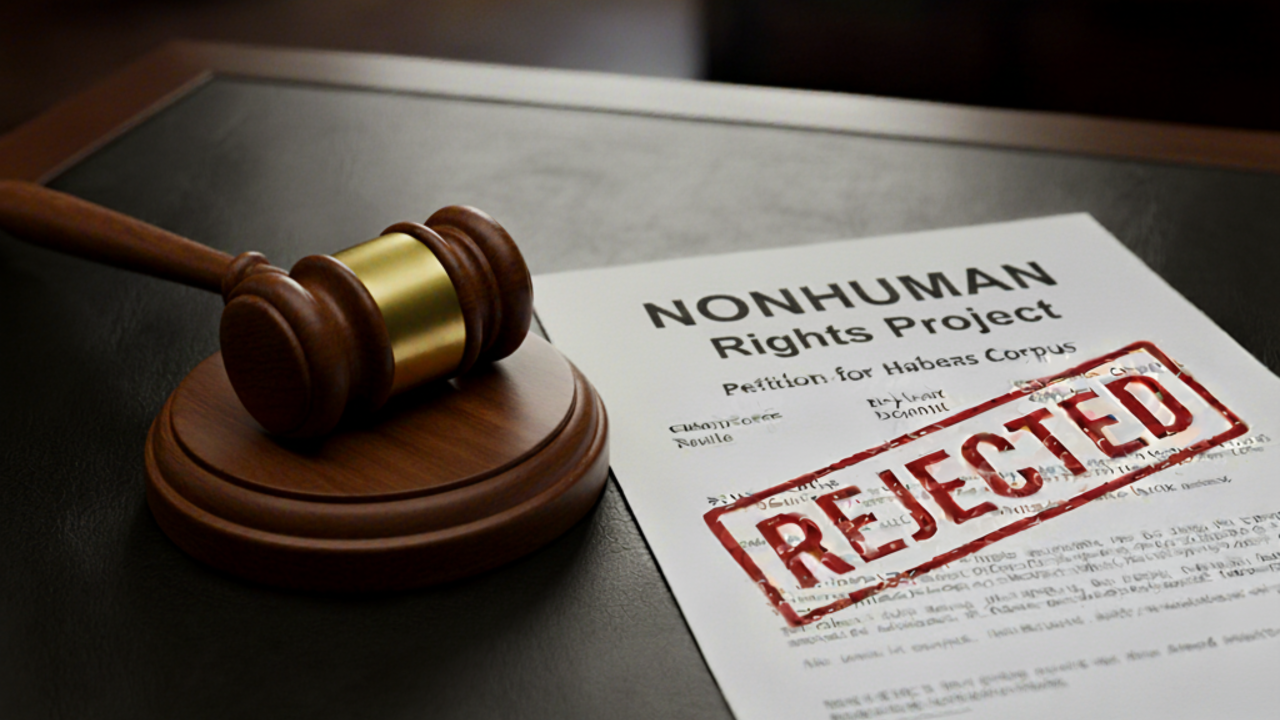
Michigan Court of Appeals says chimpanzees are not people
The Michigan Court of Appeals recently joined appellate courts from New York, Connecticut, and Colorado by ruling that chimpanzees are not people. This is another blow in the push to humanize wildlife.
Animal extremists have been trying to give wild and domesticated animals the same rights as humans for decades as a way to eliminate hunting. That is why we pay close attention to lawsuits and legislation regarding this issue.
The Nonhuman Rights Project brought the lawsuit that was rejected last week. In 2010, the organization’s founder, Steven Wise, declared that it would soon “file the first landmark cases that demand that state high courts declare that at least one nonhuman animal possesses a legal right.” Their website would later state that their mission is “to change the common law status of great apes, elephants, dolphins, and whales from mere ‘things,’ which lack the capacity to possess any legal right, to ‘legal persons,’ who possess such fundamental rights as bodily liberty and bodily integrity.”
Their first case, brought on behalf of a chimpanzee, was rejected by the Appellate Division of the New York Supreme Court in 2014. They lost another case on behalf of two chimpanzees in New York in 2015. They lost a third case on behalf of three elephants in the Connecticut Court of Appeals in 2019. They lost another case in New York on behalf of an elephant in 2022, and then another case on behalf of five elephants in the Colorado Supreme Court earlier this year. Last week’s decision from the Michigan Court of Appeals makes them zero for six.
All of the cases are very similar. The Nonhuman Rights Project finds chimpanzees and elephants in a zoo and files habeas corpus petitions on their behalf. “Habeas corpus is a doctrine that dates back to the Magna Charta,” said Michael Jean, Litigation Counsel for Sportsmen’s Alliance Foundation. “It’s a process where someone, usually an incarcerated person, can go to the courts and allege that they are being unlawfully detained. If they are successful, the court will order them to be released from custody. The doctrine has always been available for people but not animals. Animals have always been property under the law.”
Nonhuman Rights Project’s theory argues that animals like chimpanzees, dolphins, and elephants are highly intelligent, and therefore can possess human rights. This theory has been uniformly rejected. “All of these courts have acknowledged that our rights derive from the social contract,” Jean continued. “The social contract is the agreement that we make when we form a society. We receive certain rights, like habeas corpus or the Bill of Rights, but we are also obligated to follow the laws of that society. When it comes to these animals, it doesn’t matter how intelligent they are. The question is whether they can agree to bear legal duties, and the courts have said they cannot, which means that they do not possess the rights that people do.”
The courts have rightly seen these cases for what they are: “wholly frivolous.” But this reality has not deterred the Nonhuman Rights Project. It announced that it will be appealing its losing case to the Michigan Supreme Court. The group has also filed another habeas corpus petition against the Pittsburgh Zoo & Aquarium on behalf of five elephants.
Sportsmen’s Alliance Foundation will continue to monitor these frivolous cases.
The Sportsmen’s Alliance guarantees hunting, fishing and trapping for the American sportsman now and forever. We’re there when sportsmen need us most. We are the only organization specifically created to protect the individual hunter, angler, and trapper – no matter the threat. We will never compromise when it comes to defending our way of life in the courts, in the legislatures, in the public square and at the ballot box. We make this promise to the American sportsman: we will never give up and never give in while proudly securing our future against those seeking to destroy our values, beliefs, and traditions. Stay connected to Sportsmen’s Alliance: Online, Facebook, Twitter and Instagram.