Washington
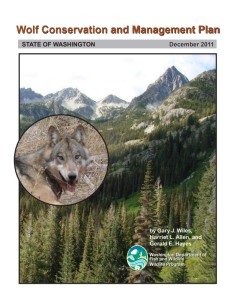 The gray wolf population in Washington is split between the federally delisted Northern Rockey Mountain DPS and Sportsmen’s Alliance suggested DPS of the West Coast. There are three recovery regions for the recovery of the gray wolf. The plan contradicts itself by stating 15 breeding pairs, 4 in each recovery zone and 3 anywhere in the state, would be an “adequate objective for delisting”, then providing an “alternative objective” of 18 breeding pairs in various recovery zones. Washington Department of Fish and Wildlife recently proposed to the Washington Wildlife Commission that the gray wolf be delisted in the state, however the commission denied the request.
Oregon
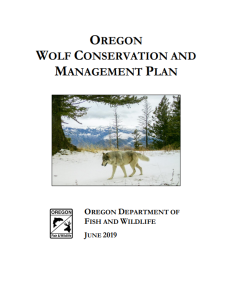 Oregon’s gray wolf population east of highways 295, 78, and 95 are considered part of the Northern Rocky Mountain Distinct Population Segment and are federally delisted. Wolves west of this line remain federally listed as endangered. The Oregon Fish and Wildlife Commission removed wolves from the state list of endangered species in 2015 however wolves remain protected under the current management plan.
California
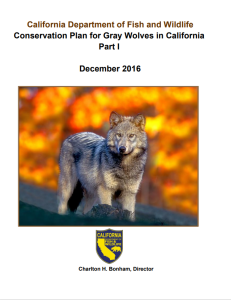 Unlike Oregon and Washington, gray wolves are considered federally endangered in all of California, making their management fall under U.S. Fish and Wildlife. California openly admits in their plan that the historic distribution and abundance of the gray wolf in the state is unclear. The management plan consists of a lot of monitoring goals and modeling, pointing to no hard-set numbers to claim recovery in the state. According to California Department of Fish and Wildlife, the gray wolf has been naturally recolonizing in California since 2011.