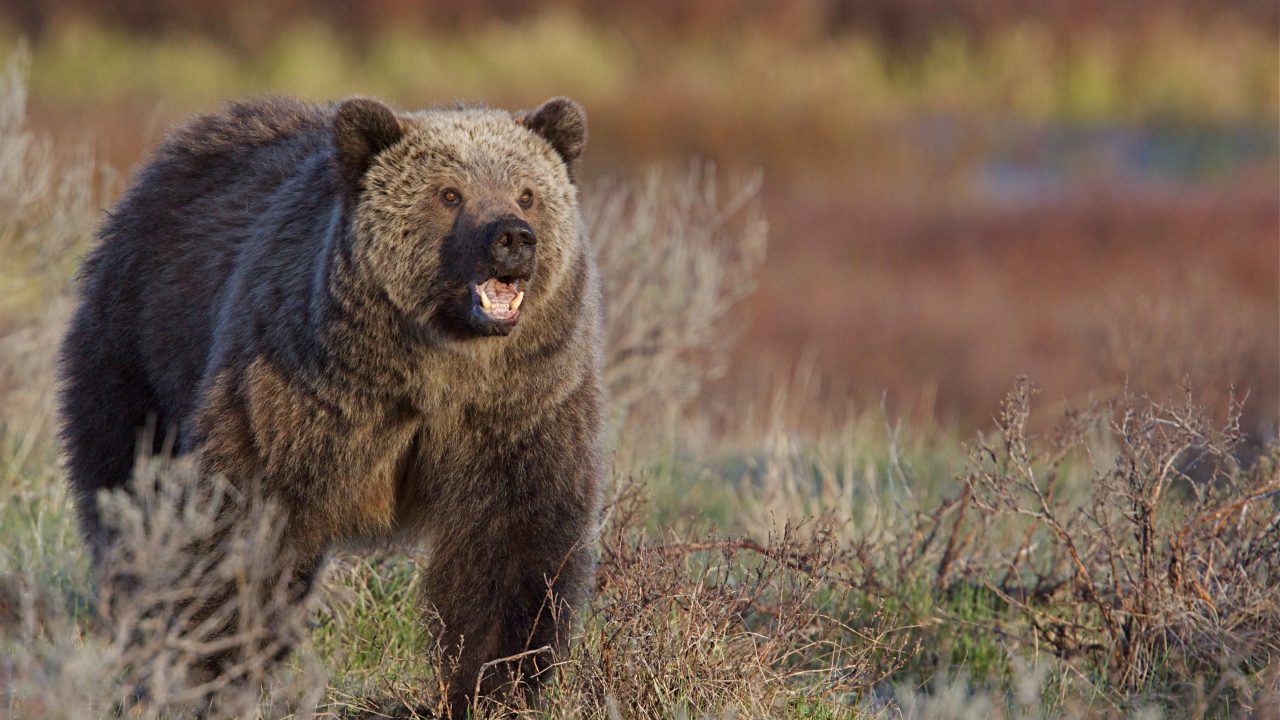
Summary: Following the Department of the Interior’s revised proposal to restore grizzly bear management flexibility to Western states, the Sportsmen’s Alliance is continuing its decades-long legal battle to secure full scientific delisting and protect sportsmen’s rights.
Why is Grizzly Bear Management Returning to the States?
The Department of the Interior announced a revised proposal to increase management flexibility for grizzly bears in areas where the species has met, and in many cases exceeded, federal recovery benchmarks. The updated management proposal ensures the Endangered Species Act is being used as Congress intended while continuing to support the species’ long-term conservation.
Secretary of the Interior Doug Burgum was joined by Montana Governor Greg Gianforte, Wyoming Governor Mark Gordon, Idaho Governor Brad Little and Fish and Wildlife Director Brian Nesvik for the announcement. The revised proposal builds on decades of conservation progress led by states, tribes, federal agencies, private landowners and local communities. By providing additional management flexibility in areas where conservation benchmarks and population objectives have been achieved, the proposal would help wildlife managers address conflicts and public safety concerns while continuing to support the long-term conservation of grizzly bears.
For the Sportsmen’s Alliance, this development is a critical step forward, mirroring the organization’s long-standing push to shift wildlife control away from federal courtroom gridlock and back into the hands of state biologists who understand the landscapes best.
What is the Sportsmen’s Alliance History in the Grizzly Delisting Fight?
While the Department of the Interior’s announcement marks an important administrative pivot, it arrives after years of intense legal skirmishes spearheaded by the Sportsmen’s Alliance Foundation (SAF). For over a decade, anti-hunting organizations like the Center for Biological Diversity have weaponized the Endangered Species Act (ESA) to keep recovered grizzly populations under federal lock and key, repeatedly suing the Department of the Interior to overturn science-based delisting rules.
The Sportsmen’s Alliance, often in partnership with the Rocky Mountain Elk Foundation (RMEF), has consistently stood as the frontline defense for sportsmen. From filing comprehensive amicus briefs to arguing for the full reversal of activist lower-court rulings in the Greater Yellowstone Ecosystem, SAF has legally countered the emotional, anti-management rhetoric of preservationist groups.
Western states have successfully managed these populations to historic highs, yet extremist litigation has consistently halted planned state hunts and stripped local communities of the tools needed to manage apex predators.
What Do Leadership and Science Say About Grizzly Recovery?
Federal officials echo the very arguments the Sportsmen’s Alliance has championed in federal courts for years. “The science is more than clear: grizzly bears have recovered and far exceeded every federal recovery benchmarks. Today, Interior is returning conservation leadership to the Western states instead of Washington bureaucrats,” said Secretary of the Interior Doug Burgum at the July 14 announcement. “Under the leadership of President Trump, we’re following the science, upholding the law and ending politics masquerading as conservation.”
With this success, however, has come an undeniable escalation in human-wildlife conflict. Grizzlies have expanded far past their traditional recovery zones, encroaching on areas heavily populated by farmers, ranchers, and outdoor recreationists. State wildlife professionals are the ones who bear the burden of these daily interactions, which makes localized management a matter of community safety.
How Do Wildlife Experts and Lawmakers Plan to Address Rising Conflicts?
“Like the bald eagle before it, the recovery of the grizzly stands as one of America’s great conservation successes—the culmination of decades of hard work and dedication on the part of state, tribal, federal, and private partners,” noted Congressman Ryan Zinke, a former Secretary of the Interior who originally advanced the delisting process. “I trust our state wildlife professionals in managing the bear population according to the best science going forward, as they do all our wildlife.”
U.S. Fish and Wildlife Director Brian Nesvik reinforced that the proposal effectively “right-sizes” management where the greatest conservation milestones have already occurred. Localized control is crucial because it allows experts to respond strictly to evidence-based conditions on the ground. When public safety and long-term conservation balance are both at stake, rigid federal mandates only serve to exacerbate local frustrations.
How Does the Revised Rule Impact Endangered Species Act Protections?
The revised proposal supports the administration’s goal of reducing unnecessary regulatory complexity, empowering states and tribes, and ensuring wildlife management decisions are practical, science-based, and effective on the ground. Crucially, the rule does not change the grizzly bear’s formal listing status under the Endangered Species Act, nor does it affect existing experimental population designations.
Grizzly bears in the lower 48 states were originally listed as threatened in 1975. Since that time, the investments of everyday sportsmen, private landowners, and state agencies have triggered undeniable population rebounds. The Sportsmen’s Alliance warns, however, that while this 4(d) rule introduces much-needed flexibility, anti-hunting factions in Congress are already introducing blanket hunting bans to bypass scientific management entirely. True delisting remains the ultimate finish line.
How Can Citizens Participate in the Public Comment Period?
The Fish and Wildlife Service is reopening a 30-day public comment period on the revised proposed 4(d) rule. This update builds directly upon a January 2025 proposal and focuses entirely on these management provisions.
To review the proposed rule, access supporting scientific documents, and read instructions on how to participate in the public comment process to make your voice heard, please visit the official rule-making portal at https://www.fws.gov/grizzlyrulemaking.
The Sportsmen’s Alliance guarantees hunting, fishing, and trapping for the American sportsman now and forever. We’re there when sportsmen need us most. We are the only organization specifically created to protect the individual hunter, angler, and trapper – no matter the threat. We will never compromise when it comes to defending our way of life in the courts, in the legislatures, in the public square, and at the ballot box. We make this promise to the American sportsman: we will never give up and never give in while proudly securing our future against those seeking to destroy our values, beliefs, and traditions.
Stay connected to the Sportsmen’s Alliance: Online, Facebook, Twitter, and Instagram.