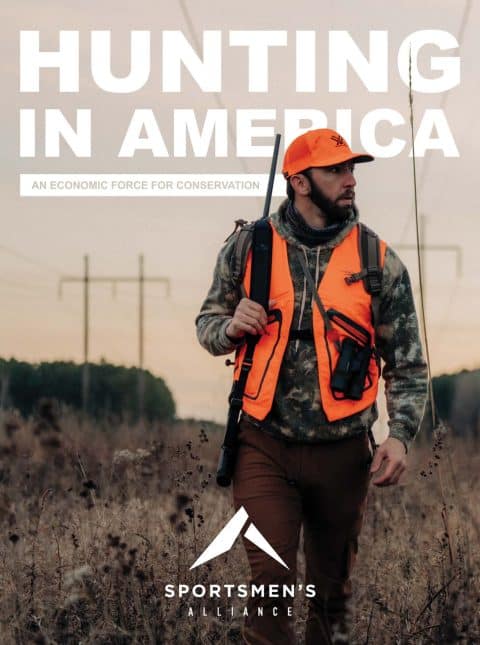
Recreational hunting and target shooting created a substantial economic impact in the U.S. during 2022, generating over $106.2 billion in combined retail sales, and contributing $133 billion to economic growth. The spending by hunters and shooters supported more than 1.3 million jobs, creating over $80.5 billion in wages and income. These effects are immense when considering them on a national level, but these sports also have crucial impacts on state and local economies. In this study we estimate the contributions that hunters and shooters make to their respective state economies based on their residence in each of the 435 U.S. congressional districts. Results are presented as printable infographics at the national, state, and congressional district level, and by major type of hunting or target shooting.
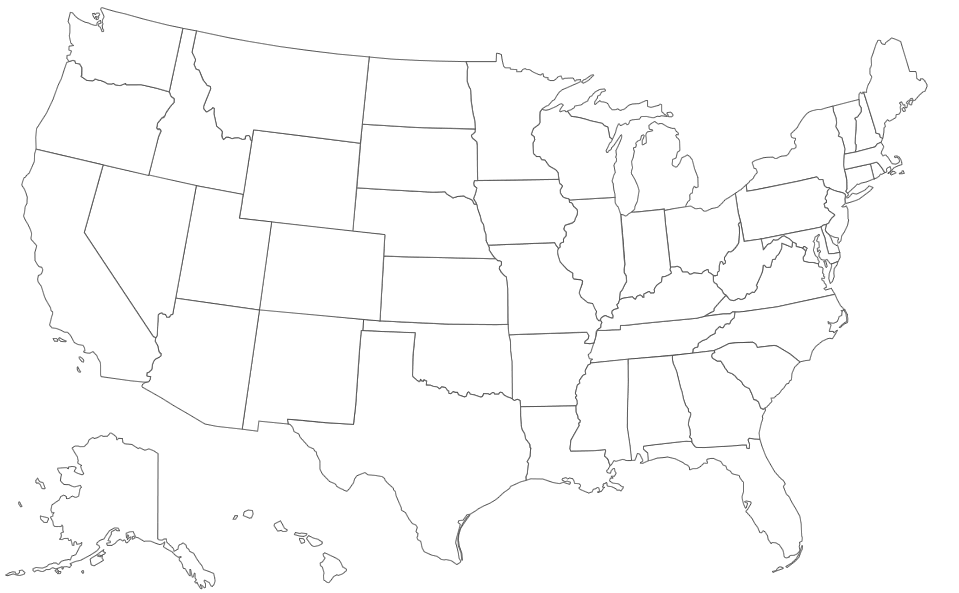
Use the map below to view economic data by state.
Hunting & Target Shooting
Economic Impact Overview Reports

Find Economic Impact Reports by State
Search by State
- Alabama
- Alaska
- Arizona
- Arkansas
- California
- Colorado
- Connecticut
- Delaware
- Florida
- Georgia
- Hawaii
- Idaho
- Illinois
- Indiana
- Iowa
- Kansas
- Kentucky
- Louisiana
- Maine
- Maryland
- Massachusetts
- Michigan
- Minnesota
- Mississippi
- Missouri
- Montana
- Nebraska
- Nevada
- New Hampshire
- New Jersey
- New Mexico
- New York
- North Carolina
- North Dakota
- Ohio
- Oklahoma
- Oregon
- Pennsylvania
- Rhode Island
- South Carolina
- South Dakota
- Tennessee
- Texas
- Utah
- Vermont
- Virginia
- Washington
- West Virginia
- Wisconsin
- Wyoming
Unbelievable Hunting and Shooting Economic Facts!
Economic Impact: Hunting Facts
- The revenue generated by the hunting industry is higher than the Gross Domestic Product of 121 countries.
- Hunters contributed nearly $38 million a day in state, local, and federal taxes that goes to support wildlife agencies and conservation.
- Hunting generated more revenue ($45.2 billion) than Nationwide ($44 billion), United Airlines ($43 billion), Dow ($43 billion), and Tyson Foods ($42.4 billion).
- The hunting industry supports 540,923 jobs – that’s more than any US company except Walmart and Amazon.
- The retail sales produced by hunting ($45.2 billion) is nearly equal to the combined system-wide sales of both Starbucks ($26.5 billion) and McDonald’s ($21.1 billion combined).
- The revenue generated by hunting is 10 times more than the revenue of the top 10 most valuable NFL teams combined ($4.5 billion).
- Hunting generated well over three times more revenue in 2020 ($45.2 billion) than the NFL ($12 billion).
- Hunting generates more revenue ($45.2 billion) than the worth of the Top 10 most valuable MLB teams combined ($33 billion).
- The revenue generated by migratory bird hunting ($5.9 billion) is more than the revenue of the top 10 most valuable NFL teams combined ($4.5 billion).
Economic Impact: Target Shooting Facts
- The economic activity generated by target shooting ($61.2 billion) is greater than the Gross Domestic Product of 7 states.
- The contribution to the U.S. GDP from the activities of target shooters is greater than the overall GDP of 132 countries.
- The revenue generated by the handgun industry ($20 billion) is higher than the Gross Domestic Product of 97 countries.
- U.S. target shooters outnumber the population of every U.S. state and DC, except California.
- The federal taxes generated by target shooting activities ($19.9 billion) are over three times the budget of the National Oceanic and Atmospheric Administration (NOAA) in 2020 ($5.35 billion).
- Target shooting generated more revenue ($61.2 billion) than Sysco ($60.1 billion), Christian Dior ($60.1 billion), Lockheed Martin ($59.8 billion), or HP ($58.8 billion).
- More people went target shooting in 2020 than participated in golf, tennis, basketball, or soccer.
- The revenue generated by target shooting ($61.2 billion) is greater than the combined revenue of all 32 NFL teams ($13 billion).
- The revenue generated by rifle shooting is over 10 times the combined gross revenue of the top 25 box office movies of 2020.
The Hunting and Target Shooting in America: An Economic Force for Conservation reports were produced for Sportsmen’s Alliance Foundation by Southwick Associates via a Multistate Grant awarded by the Wildlife and Sport Fish Restoration Programs of the U.S. Fish and Wildlife Service and were off of the 2022 National Survey of Fishing, Hunting and Wildlife-Associated Recreation report by the U.S. Fish and Wildlife Service and other independent resources.