According to most legitimate public polls, the non-hunting community overwhelmingly supports hunting as a wildlife management tool and food source. In most instances, reasonable people understand the need to balance wildlife with the available habitat, to reduce human-wildlife conflict issues (especially when it concerns large predators) and to provide sustenance.
Yet, when that same group of people are polled about trophy hunting, the support drops astronomically. Those reasonable people equate the qualifier “trophy” with antithetical ideas such as wanton waste and ego.
As hunters, we know that’s emphatically not the case. Hunting for a mature animal, regardless of species, requires dedication, hard work, skill and luck. It also means younger animals are passed up, allowed to live for future seasons (which might not happen in the case of a “meat” hunt). Biologically, a mature animal has likely bred many times over, ensuring genetic diversity within the population and fulfilling his biological role.
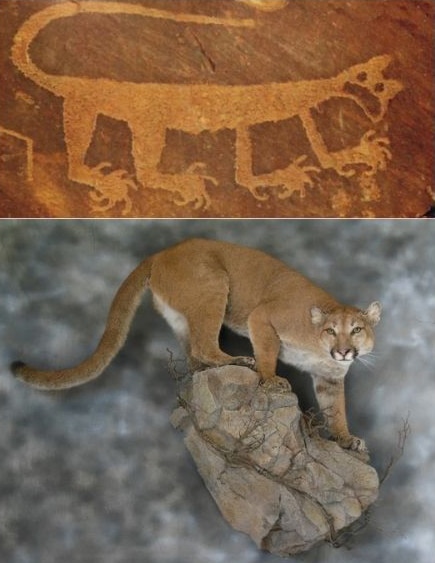
Today’s taxidermy embodies the same instinctual needs every culture on every continent, from prehistoric dwellings to modern homes, has used to honor the hunt.
However, the animal-rights movement has seized on this misperception, and has crafted emotional messaging that paints all hunting as nothing but wasteful killing for the satisfaction of a minority of hunters. They frame the hunt as anything but fair chase, and claim only to want to end this one deadly practice – be it for “charismatic megafauna” overseas or predators here.
A plethora of practices now constitute “trophy” hunting, when in reality they are nothing more than regulated hunting and wildlife management. As a result, everything from bear hunting in Pennsylvania to mountain lion hunting in Colorado has been depicted as trophy hunts. What’s more, several states have introduced legislation banning even the possession of taxidermy of many African species.
Sportsmen must overcome this idea: that taxidermy is somehow equitable to wanton waste. While that might be hard to parlay in mainstream media, we can all do our part within our sphere of influence to shape the perceptions of the non-hunters. To that end, the truth about hunting trophies.
Trophies are part of Human Nature
As much as animal-rights activists love to portray taxidermy on the walls of our homes as unnatural, egocentric and psychopathic, it’s anything but.
Every culture on every continent throughout time has displayed trophies of the hunt. Primitive man carved and painted animals and scenes from the hunt on the walls of their caves. Indigenous people worldwide wore the skins, feathers and bones of the animals they killed, not just out of necessity, but for ritualistic display and to differentiate between political or social standing in their society.
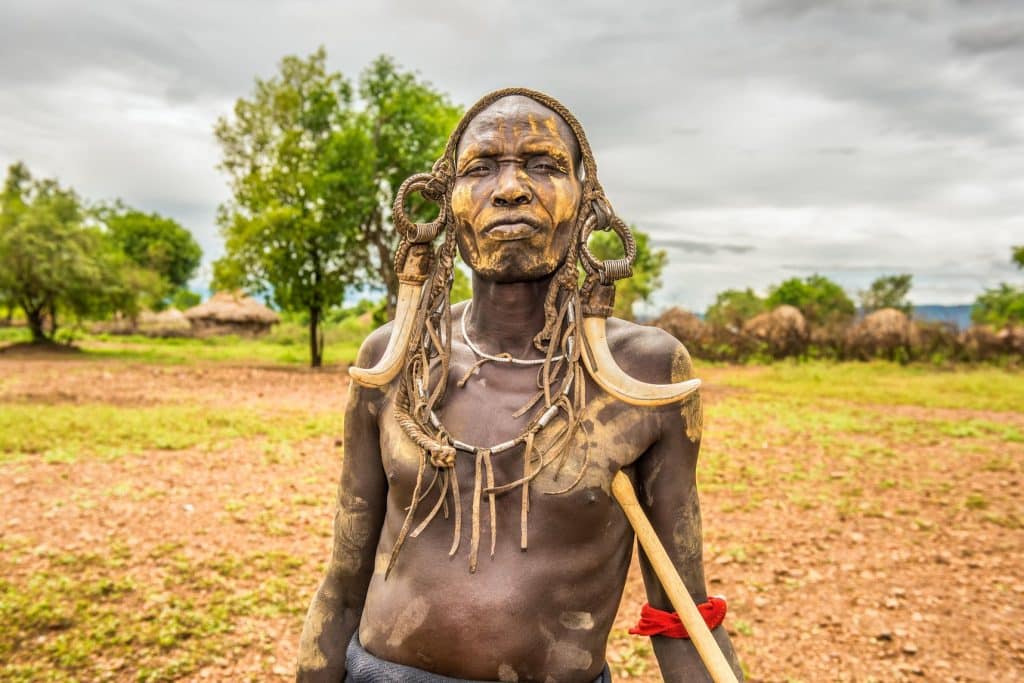
Trophies have taken many forms over time and around the world, but they have all included not just taxidermy, but tools, clothing, jewelry and other adornments signifying societal stature, rank or special occasions.
Documentation and commemoration of the hunt takes place from prehistoric time through ancient Egypt, China and Greece, where tomb walls and papyrus scrolls were adorned with imagery recording the use of weapons, horses, nets, dogs, falcons and the prey taken. Medieval tapestries were hung on walls of homes depicting the same scenes.
This universal desire to record and relive the hunt is obviously nothing new. Taxidermy is just another iteration, and it’s not even innovative. The oldest surviving example of taxidermy dates to a nearly 500-year-old crocodile hanging in an Italian church. The favorite pets of 17th Century aristocrats, including warhorses, dogs and even parrots, have been memorialized through taxidermy. This perpetual need to honor the animals in our lives, whether wild or domestic, permeates the human consciousness.
There is nothing abnormal about taking a picture with a kill, animal parts on display or celebration surrounding a successful hunt. Preserving a piece of that memory, the time, skill, patience and proficiency it took to be successful, is understandable when taken in context. Memorializing the hunt has been with us from the moment we were first able to document it, and it’s been practiced by every culture that has ever lived.
Trophies are the Embodiment of a Memory
Today, taxidermy has evolved into a modern art form, with some pieces in the actual art scene fetching tens of thousands of dollars. For the hunter, taxidermy mounts are a means of self-expression and a respectful tribute to the animal he has killed. As much as a physical reminder, that animal on the wall embodies not just the memory and story, but the spirit of the animal and hunt; the connection between predator and prey, and all that goes into that relationship.
That realistic incarnation of an animal displayed in our home or office is an enduring legacy and memory of the animal. Decades later, long after the meat has been consumed, the animal’s likeness, story and spirit continue to live on.
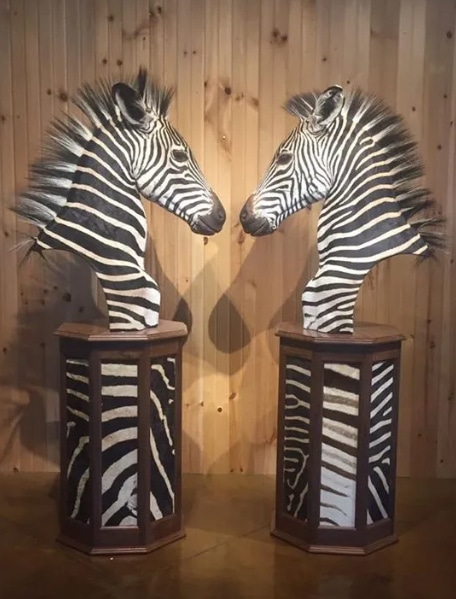
Today’s taxidermy are works of art that would amaze our ancestors with their lifelike appearance, habitat inclusion and staging. Ethically, trophies such as taxidermy use more of the animal than just the meat.
Often, animals are posed in positions, complete with habitat surroundings, reminiscent of the final moments of its life – a culminating restoration of the hunt that reminds the hunter of that exact moment and effectively tells the story to anyone who sees it. Other times, the animal is posed in the most regal and statuesque manner possible; a tribute to the species itself and the spirit of the individual animal and memory of the hunt so proper and magnificent, our ancestors would be astonished.
However, the trophy can take many more forms. Whether as a rug, skull display or tools, furniture pieces, clothing and jewelry, making use of and displaying all the animal has to offer, from horns and hide to tail feathers and claws, symbolizes the connection between predator and prey … between man and animal.
It is the iconic head on the wall however, that animal-rights activists have unjustly simplified and saddled with emotional rhetoric that turns usually reasonable people against hunting. The more “charismatic” and symbolic the animal, the greater the emotional response. While claiming moral superiority in the condemnation of “trophy” hunting, animal-rights organizations wholly misplace even the most basic idea of ethics when it comes to individual animals and place entire species at risk with their rhetoric.
Trophies are Morally Superior
Despite the assertions of animal-rights organizations, making a trophy of your kill isn’t just natural, it’s also ethical and morally superior.
It’s universally accepted that if you kill an animal, you should make use of that animal. Rarely do people have an issue with subsistence hunting or the use of hides for clothing or other body parts for rituals by indigenous people. Indeed, not using as much of the animal as possible is frowned upon by people and is often illegal.
It’s an intellectually dishonest, circular argument the animal-rights movement has adopted. In one breath, they claim that any hunting that doesn’t make the utmost use of an animal is immoral, and then in the next persecute anyone who does make use of the hide, horns, feathers and skulls for taxidermy, jewelry, clothing, furniture or more.
When it comes to African species, which invoke the greatest wrath of the animal-rights crowd, the meat of the hunted animals can’t be imported into the U.S.; rather, it is eaten in camp, given to local communities or finds its way to market. The trophy is the only physical reminder of the hunt that can be brought back from overseas, and is the only way the entire animal could be used.

Furniture, whether an antler chandelier, hide-covered chair or pillow, are pragmatic uses of inedible animal parts, which would otherwise go to waste, from a successful hunt.
Further, it is those imperiled African species that rely the most on “trophy” hunting. The conservation, anti-poaching and habitat enhancement and protection funding from hunting depends on the income generated from hunters willing to pay to hunt those select, mature, animals that have served their biological role. Without the funding from “trophy” hunting, wild habitats and ecosystems would be converted to more valuable agriculture fields to feed the booming populations found in many African countries.
If the rhetoric of the animal-rights movement were adopted and trophy hunting abandoned, not only would those individual animals that were to be hunted die anyway, their entire species would suffer as habitat disappeared and they were killed for meat or depredation of those new croplands. Of course, we know the ultimate goal of the animal-rights movement isn’t just trophy hunting of African species or predators here in the U.S., but of all hunting for any animal.
We know, too, that their rhetoric leads to more suffering and death of animals from the fallout of their policies that have passed stateside, where animals such as mountain lions and bears are killed by state officers due to increased depredation of livestock or attacks on humans. The meat from those animals isn’t used to feed anyone. The hides and skulls don’t adorn anyone’s wall, which is what proponents want. But worse, those animals still die, they are just killed quietly and are completely wasted as officers are usually required to dispose of the carcasses in the ditch or landfill. That is the real waste when it comes to wildlife, and an action that is universally denounced, but the truth behind the animal-rights philosophy.
The next time you hear someone condemn trophy hunting, ask them what exactly they’re criticizing. Listen to them. Ask follow-up questions about those likely inaccurate beliefs and misplaced ethics, and what they actually believe and want to see for the world’s wildlife. And then explain how a trophy is so much more than just a head on a wall.
Psychology of a Hunter
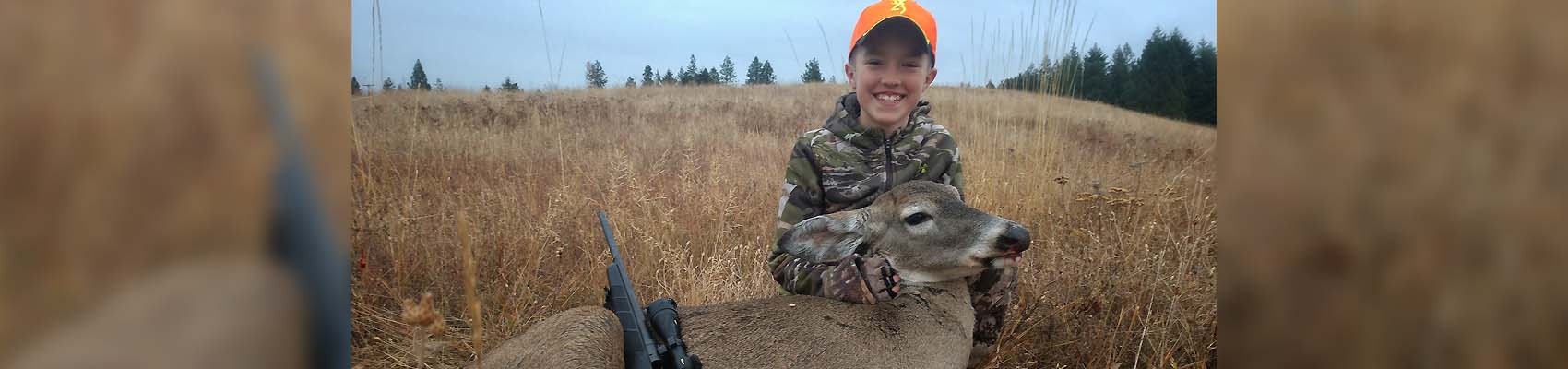
Many anti-hunters claim that sportsmen are psychologically damaged. They say we are sadistic and compare hunting trophies to the trophies taken by serial killers.
These assertions have zero foundation in any reality or psychological evidence. James Swan, author of In Defense of Hunting, is a retired college professor of psychology and environmental studies, and a founder of the division of environment, population and conservation psychology in the American Psychological Association. He’s taught at four universities and three psychology grad schools. In writing for NRA’s American Hunter, Swan eviscerates these claims with evidence:
• Some of the most prominent psychologists of the 20th century have stated that hunting is motivated by a natural instinct and is beneficial to mental health, including Erich Fromm, Steven Kellert, Jan Dizard, Karl Menninger, Sigmund Freud and Carl Jung.
• Emory University professors Boyd Eaton, M.D., anthropologist Majorie Shostak and psychiatrist-anthropologist Melvin Konner, M.D., concluded just the opposite of anti-hunter claims: that denial of the hunting instinct can lead to psychopathology.
• In his own research of more than 400 professional journals, Swan found nearly 300 articles that use the word “hunting.” None report any correlation between ethical hunters and psychopathology.
• The American Psychological Association reported that they weren’t aware of any research to support claims that hunters in general are prone to mental illness.
• Criminologist Chris Eskridge compared hunting license sales with violent crime rates by county, and found that as license sales increase, violent crime decreases.
Like What You Read?

This article originally appeared in Sportsmen’s Alliance members-only magazine. Join the Sportsmen’s Alliance today and be the first to read articles like this with a subscription to The Sportsmen’s Advocate, The Official Publication of the Sportsmen’s Alliance.
About the Sportsmen’s Alliance: The Sportsmen’s Alliance protects and defends America’s wildlife conservation programs and the pursuits – hunting, fishing and trapping – that generate the money to pay for them. Sportsmen’s Alliance Foundation is responsible for public education, legal defense and research. Its mission is accomplished through several distinct programs coordinated to provide the most complete defense capability possible. Stay connected to Sportsmen’s Alliance: Online, Facebook, Twitter and Instagram.